Day 1
Introduction
The first day focused on getting to know each other and becoming familiar with the Makerslab and Woodshop. We learned how to safely use the equipment and explored the possibilities of both spaces.
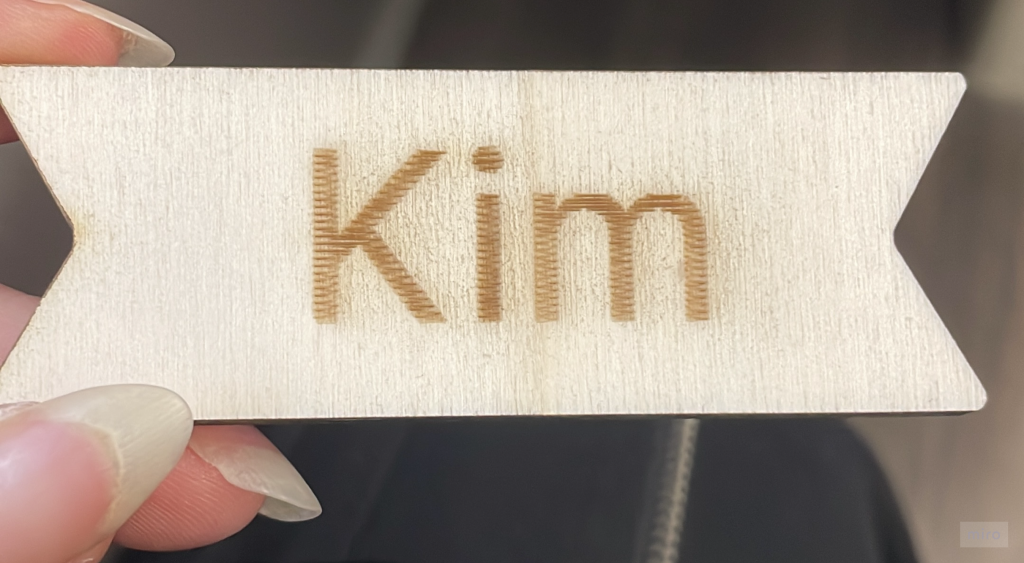
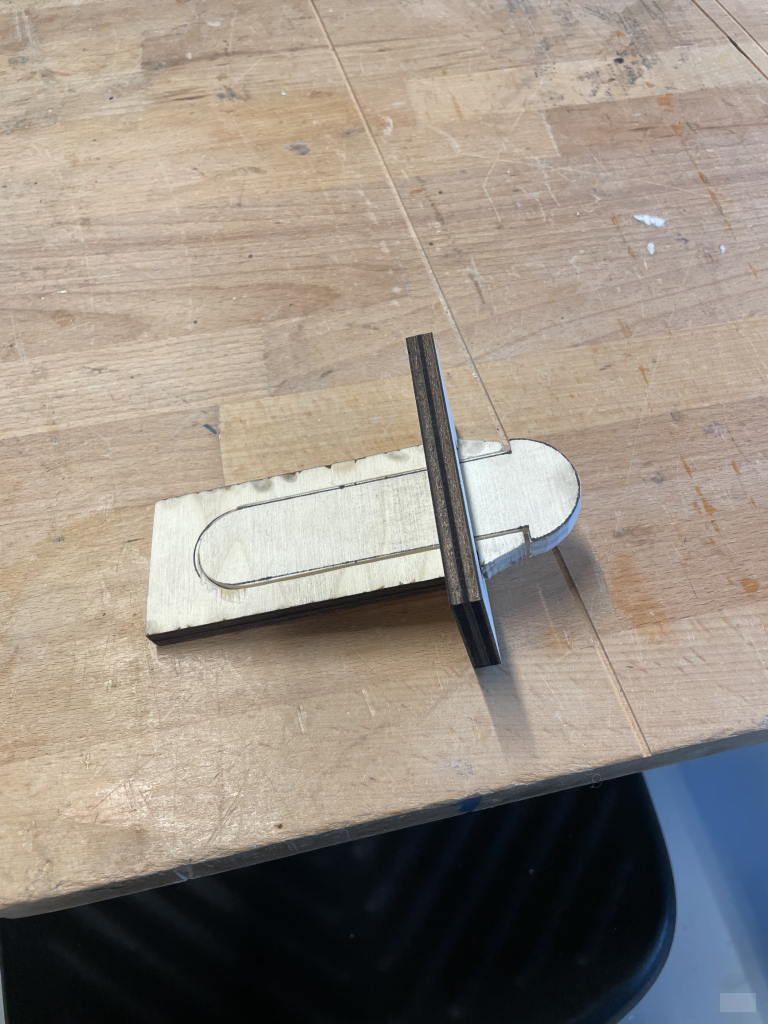
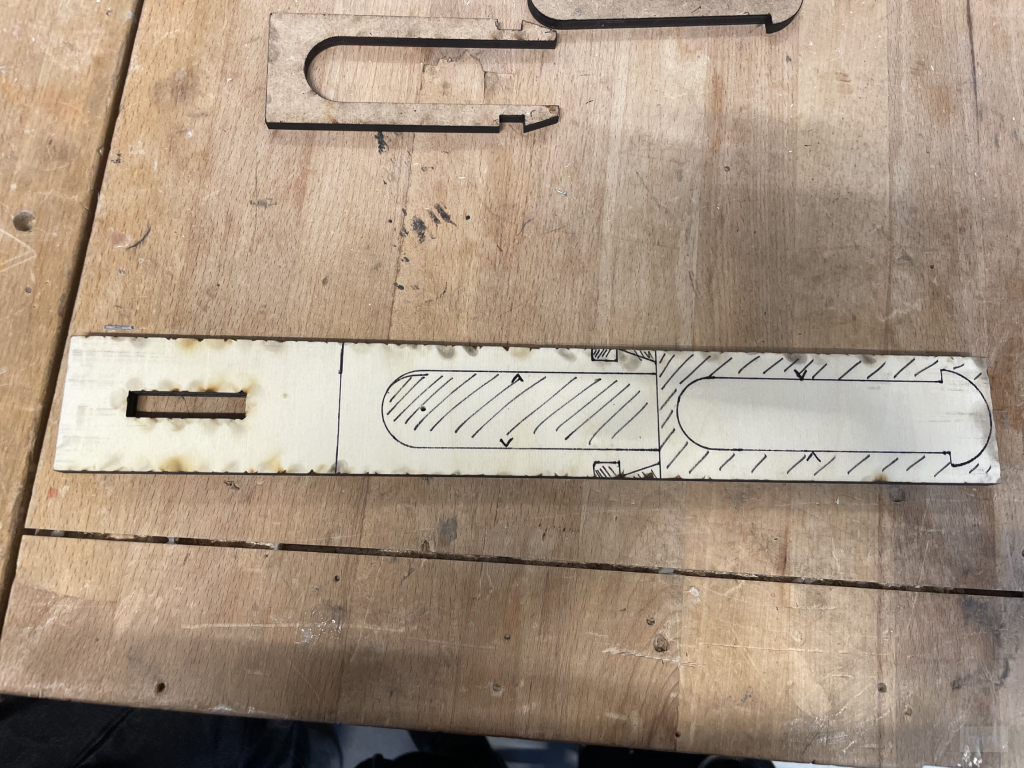
In the Woodshop, we created a Chinese wood joint construction without using glue. Through this task we got introduced to precision and material understanding. In the Makerslab, we desgined our own nametags in Figma and produced them using the laser cutter. This helped us get comfortable with digital fabrication tools and the workflows within both spaces.
Day 2
Exploration
We received our main assignment for the week: to design an object that makes people stop in a public space. We started with a brainstorm session, discussing what makes people curious, playful, or willing to interact in public.
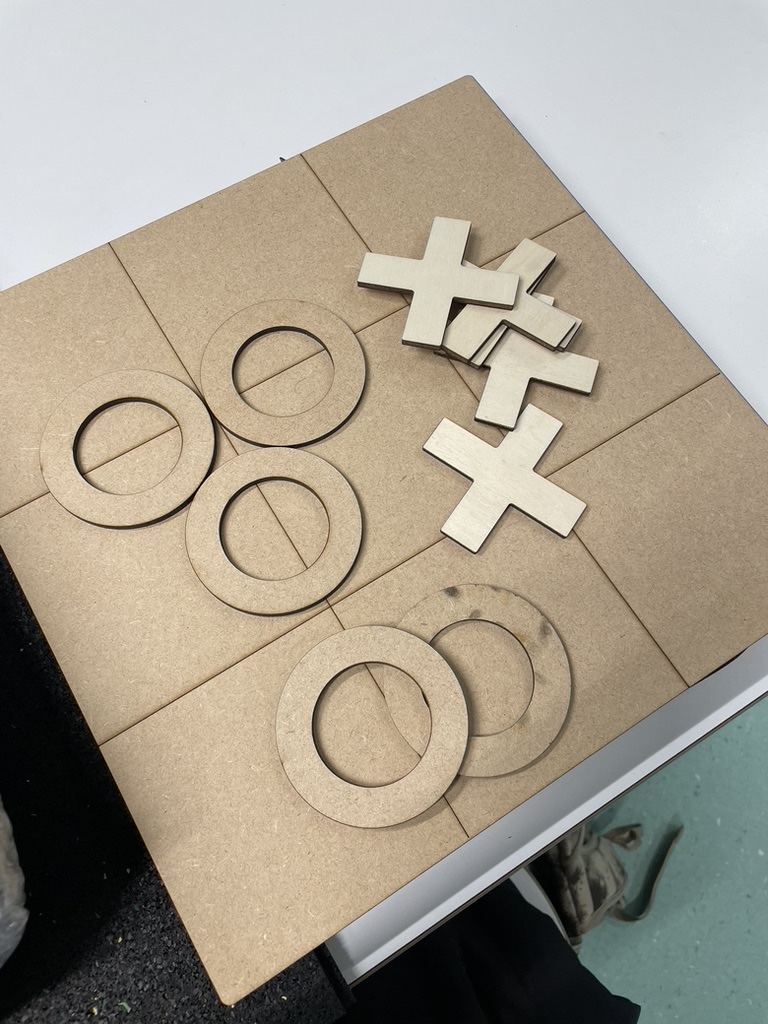
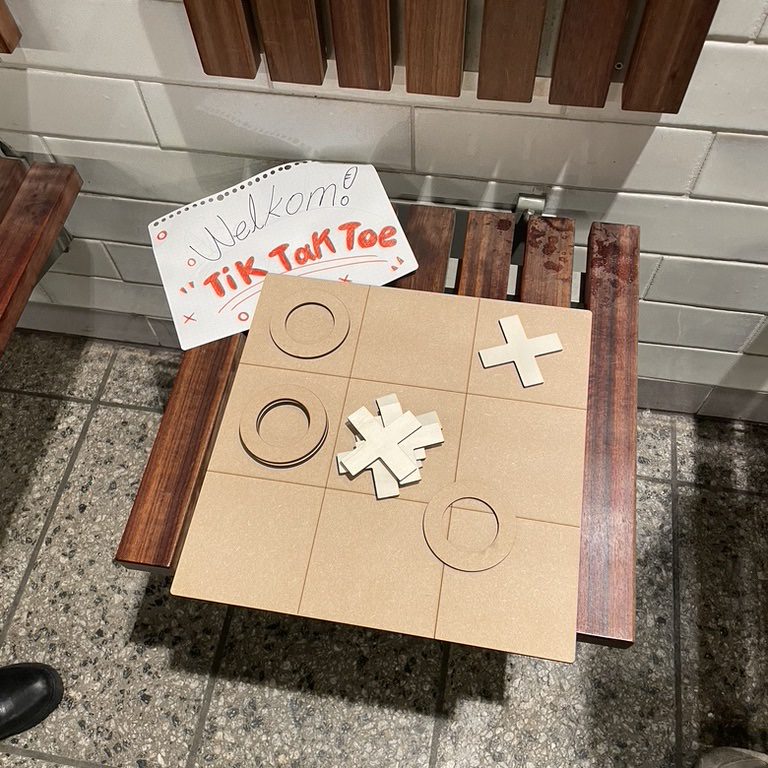
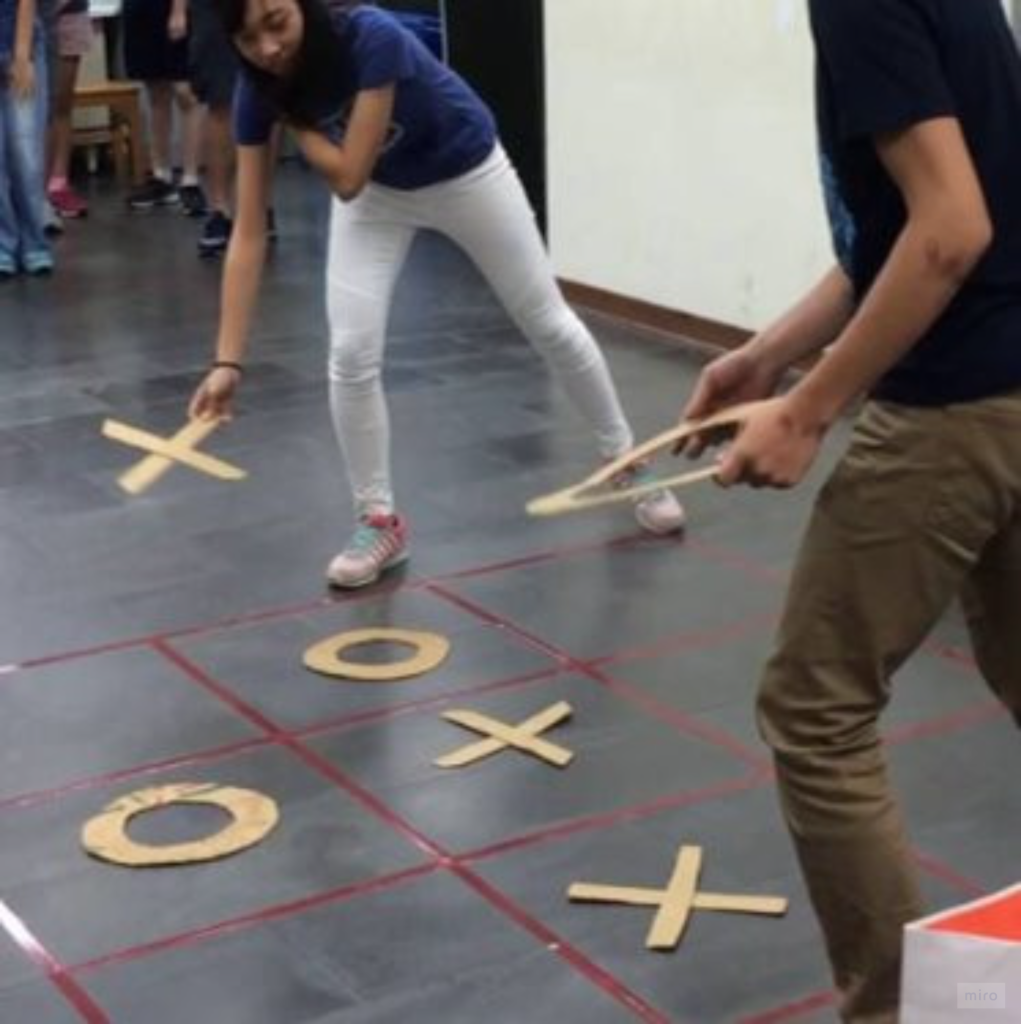
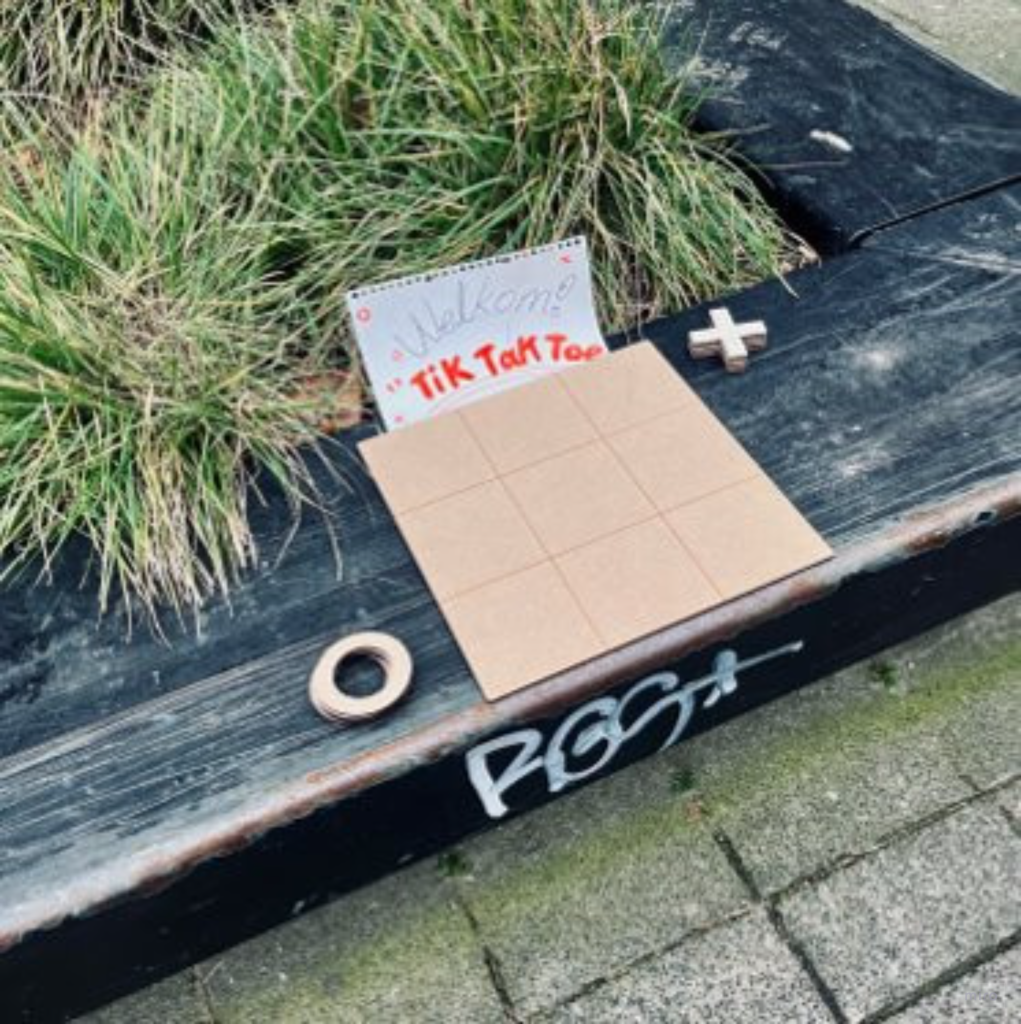
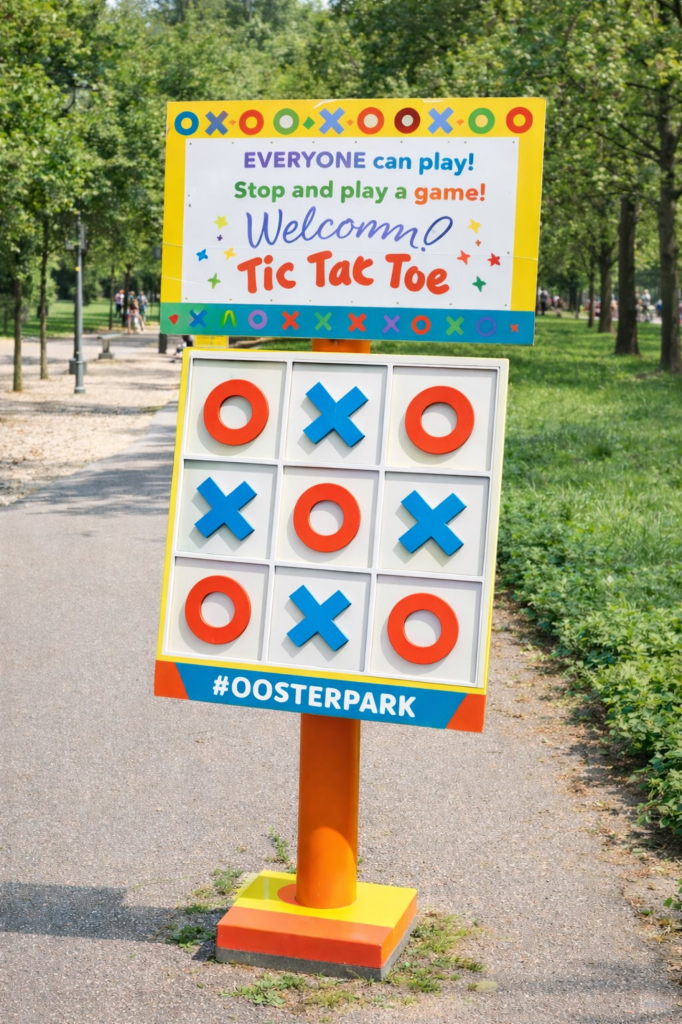
We explored different types of interaction and decided to create a simple and recognisable game. Our first prototype was a laser cut tic tac toe board with separate playing pieces. We focused on working quickly so we could test in a real environment.
However, the design turned out to be too flat and visually subtle. It did not stand out from it’s surroundings, and only a few people noticed it. This showed us that visibility plays a crucial role in attracting interaction.
Day 3
Iteration
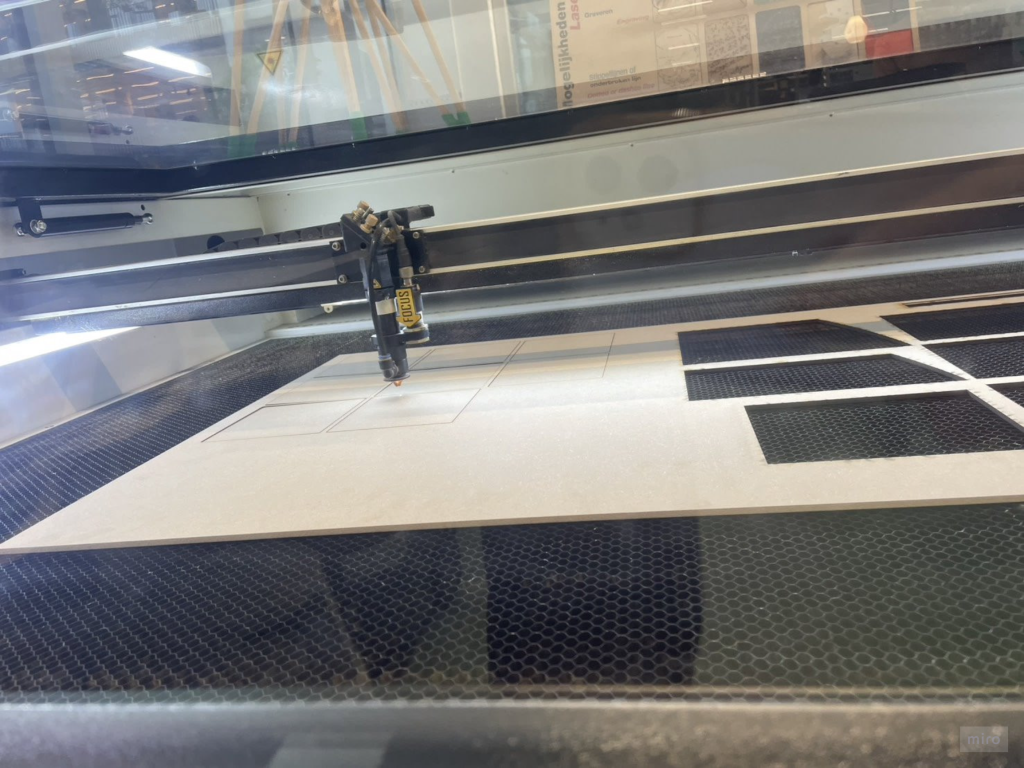
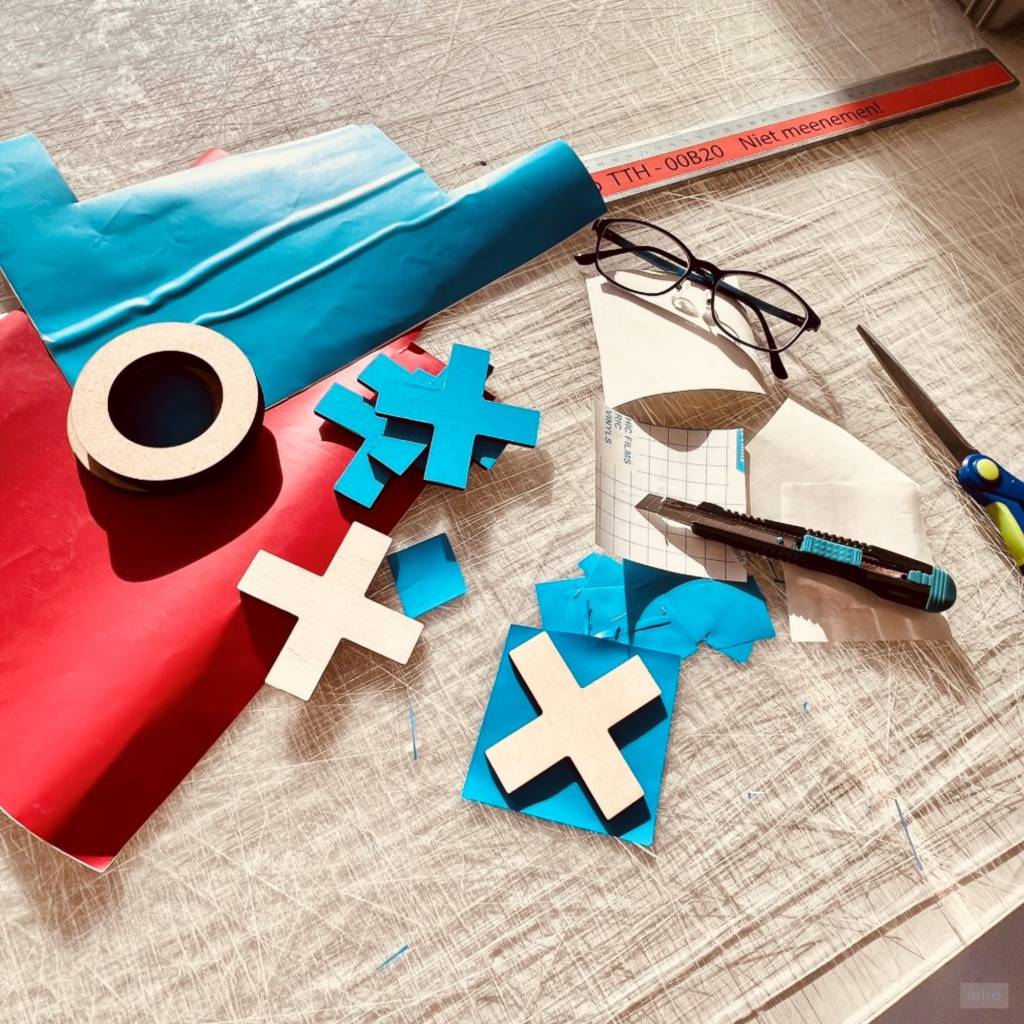
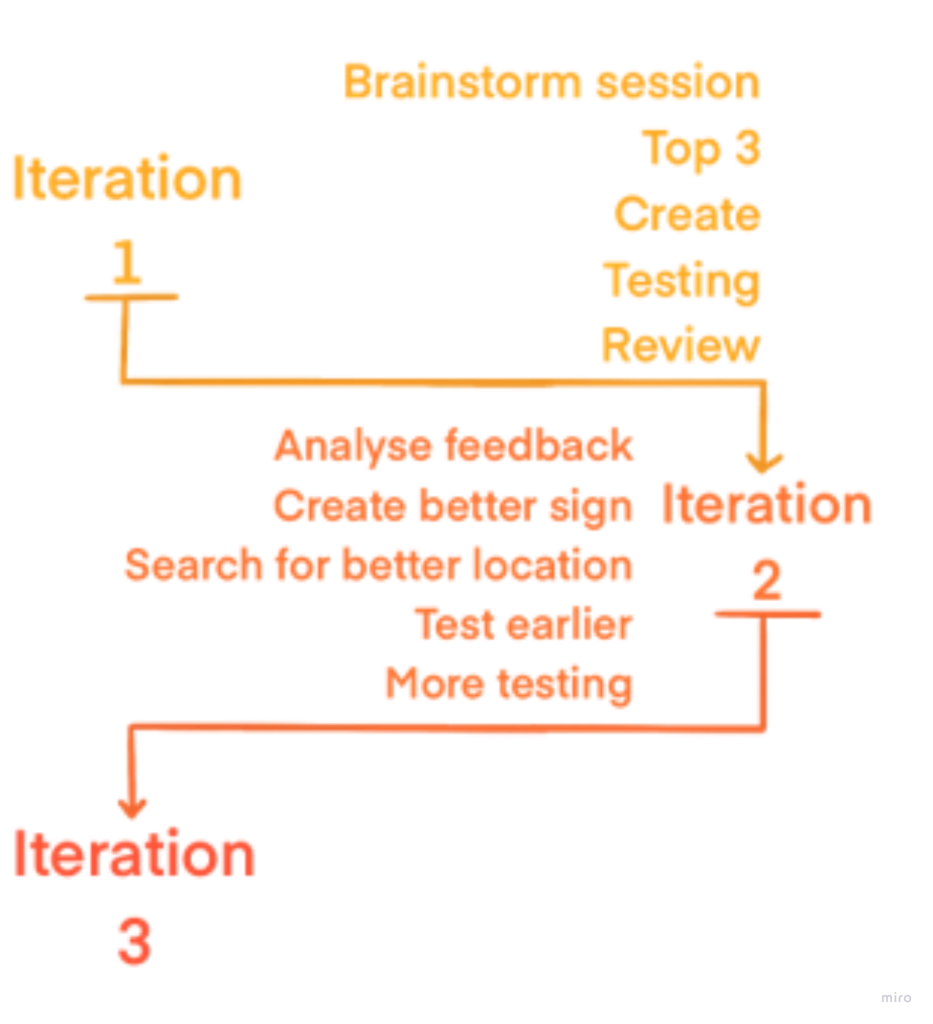
We presented our first prototype and received constructive feedback from teachers and peers. This feedback helped us reflect more critically on our design decisions.
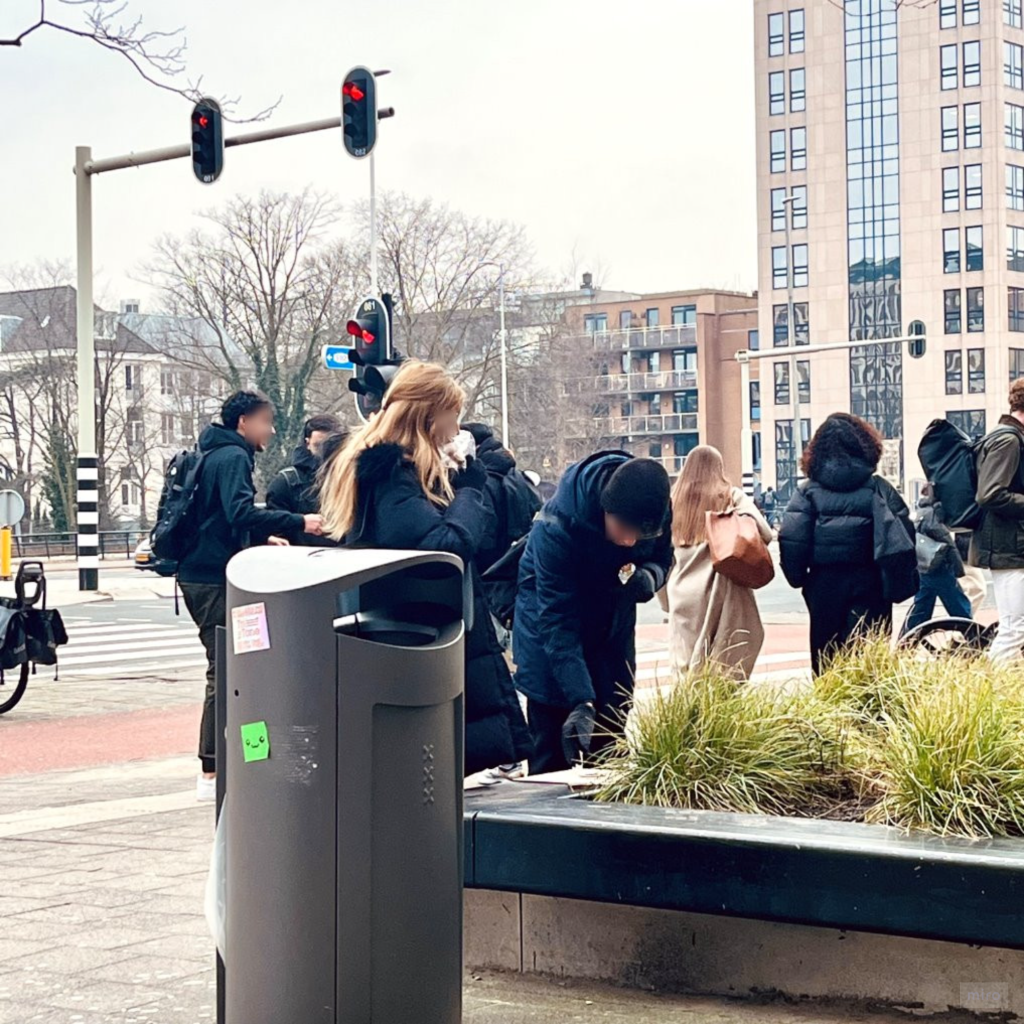
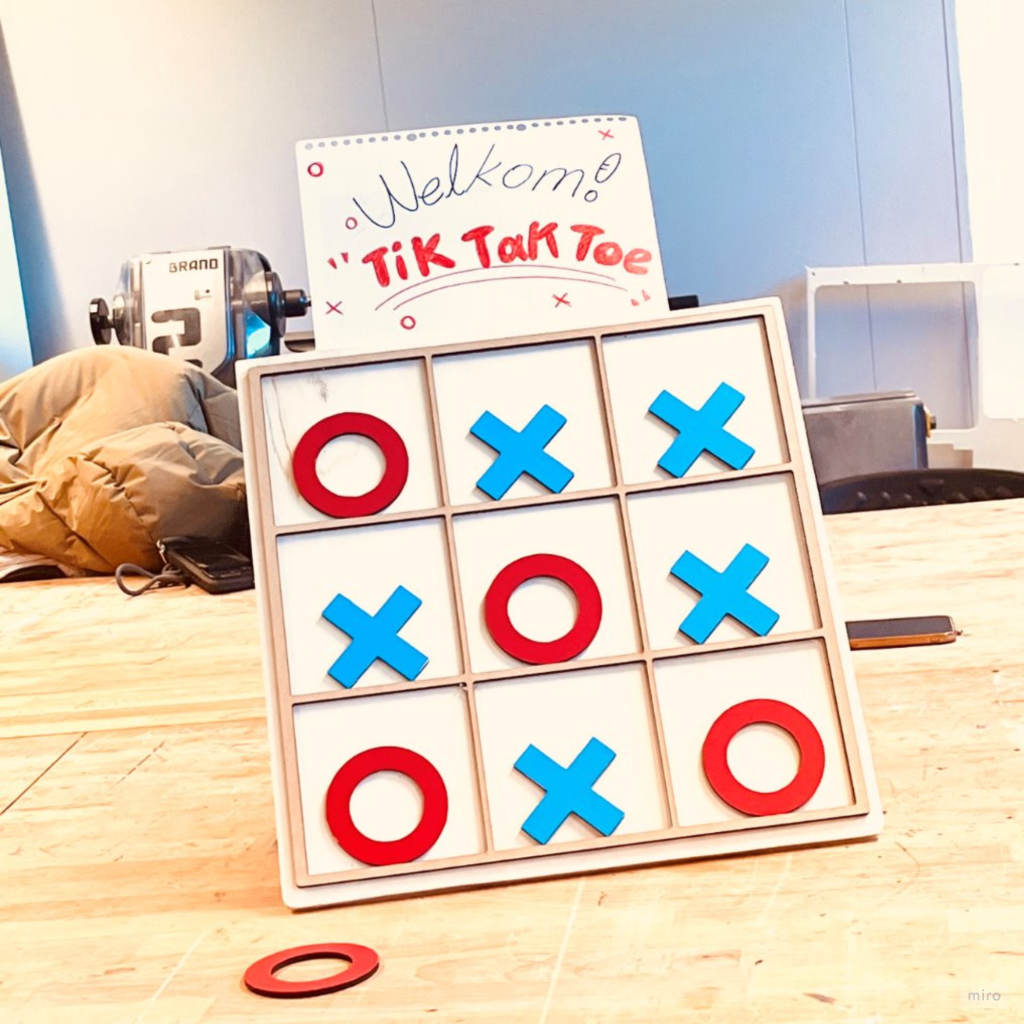
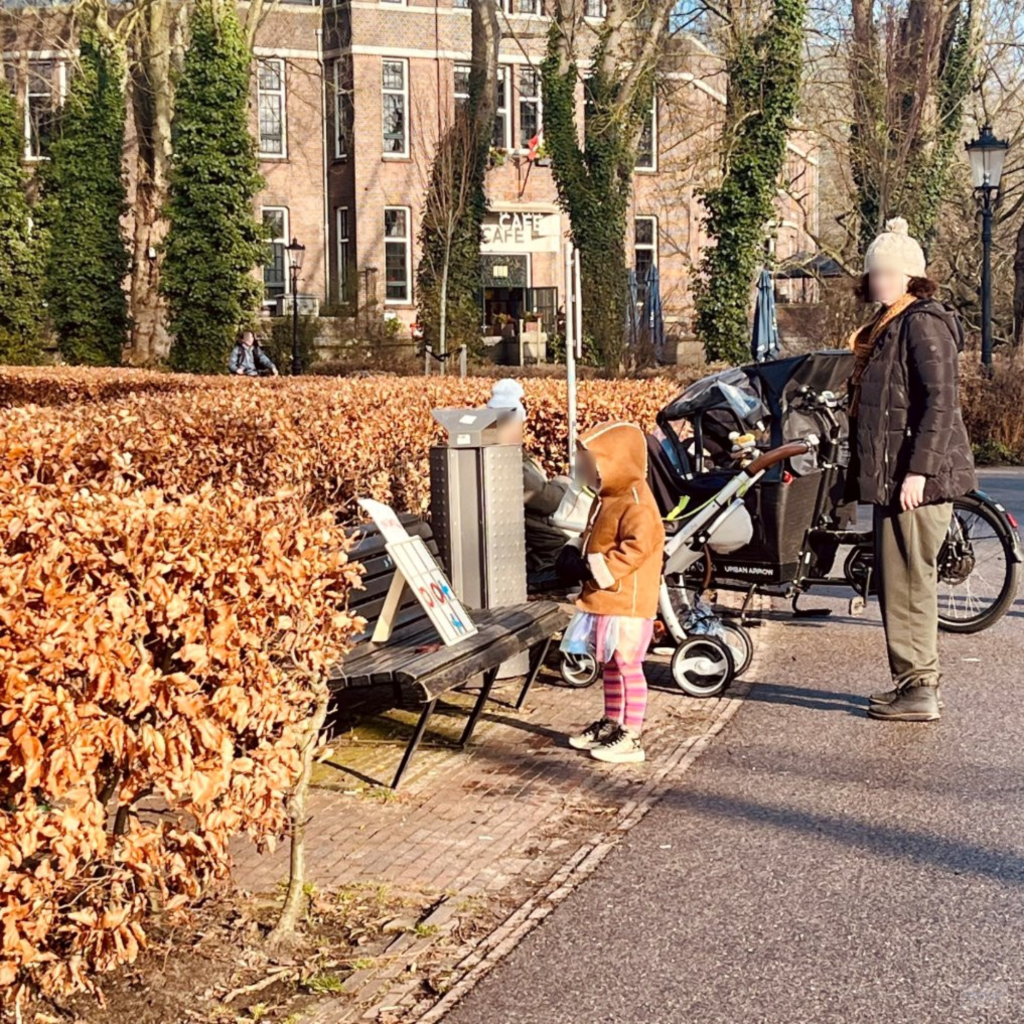
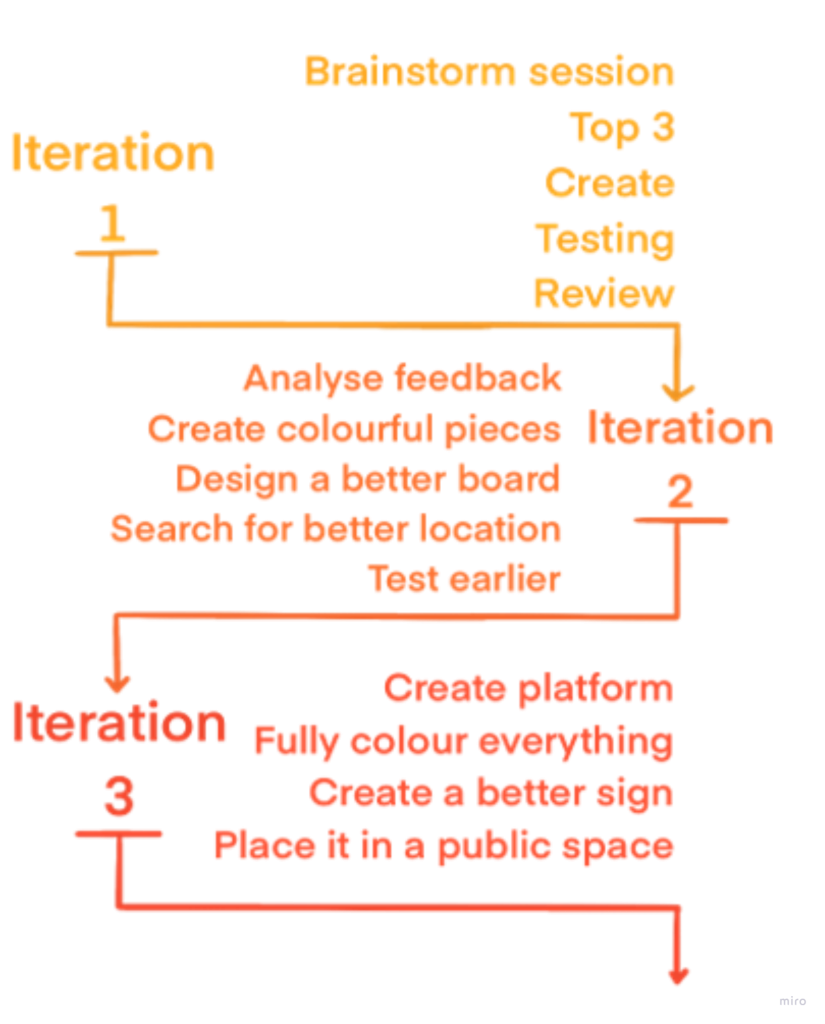
We quickly developed a second iteration and tested it later that same day. While the board itself had improved, we discovered that the location had a bigger impact than expected. We had placed it in an area where people mainly pass through and focus on reaching their destination.
This led us to rethink our approach. We decided to test the board in locations where people naturally spend more time, such as a high school and a park. These environments are more suitable for interaction and play.
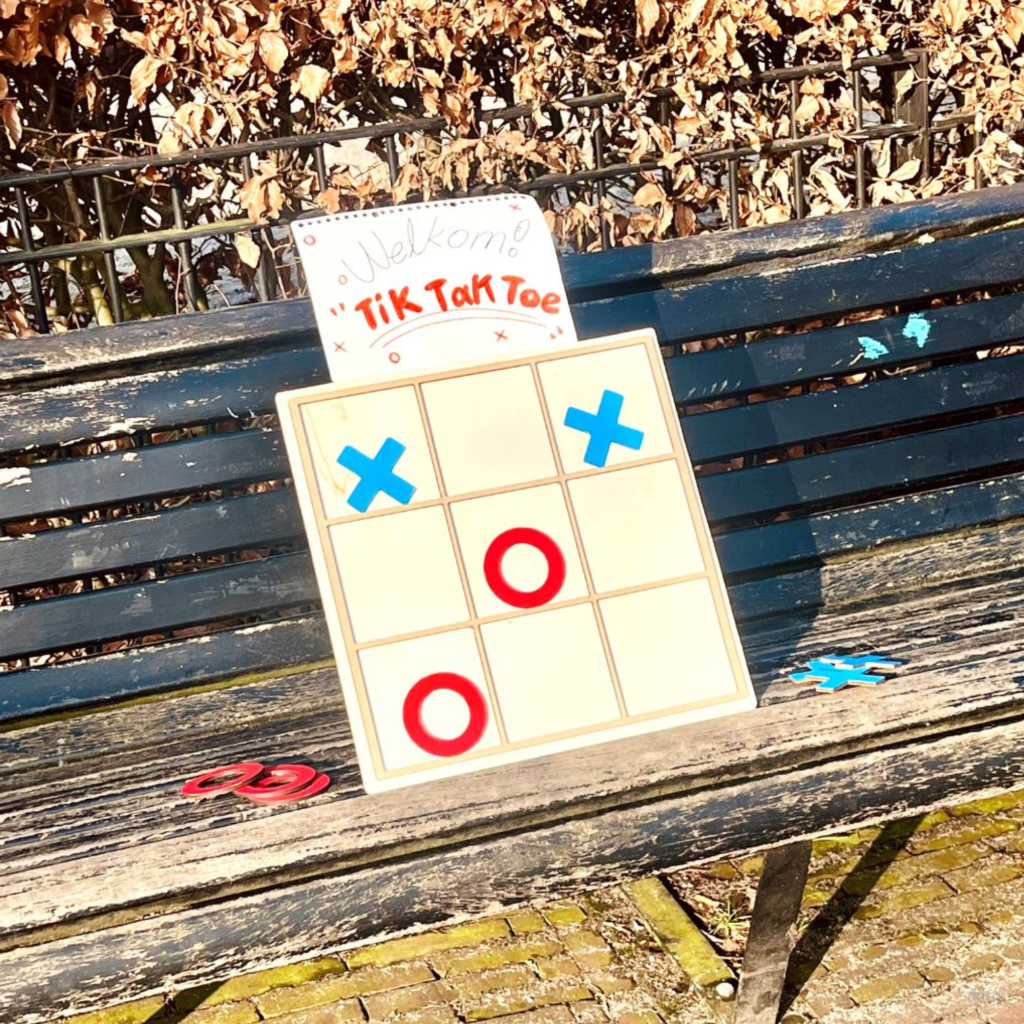
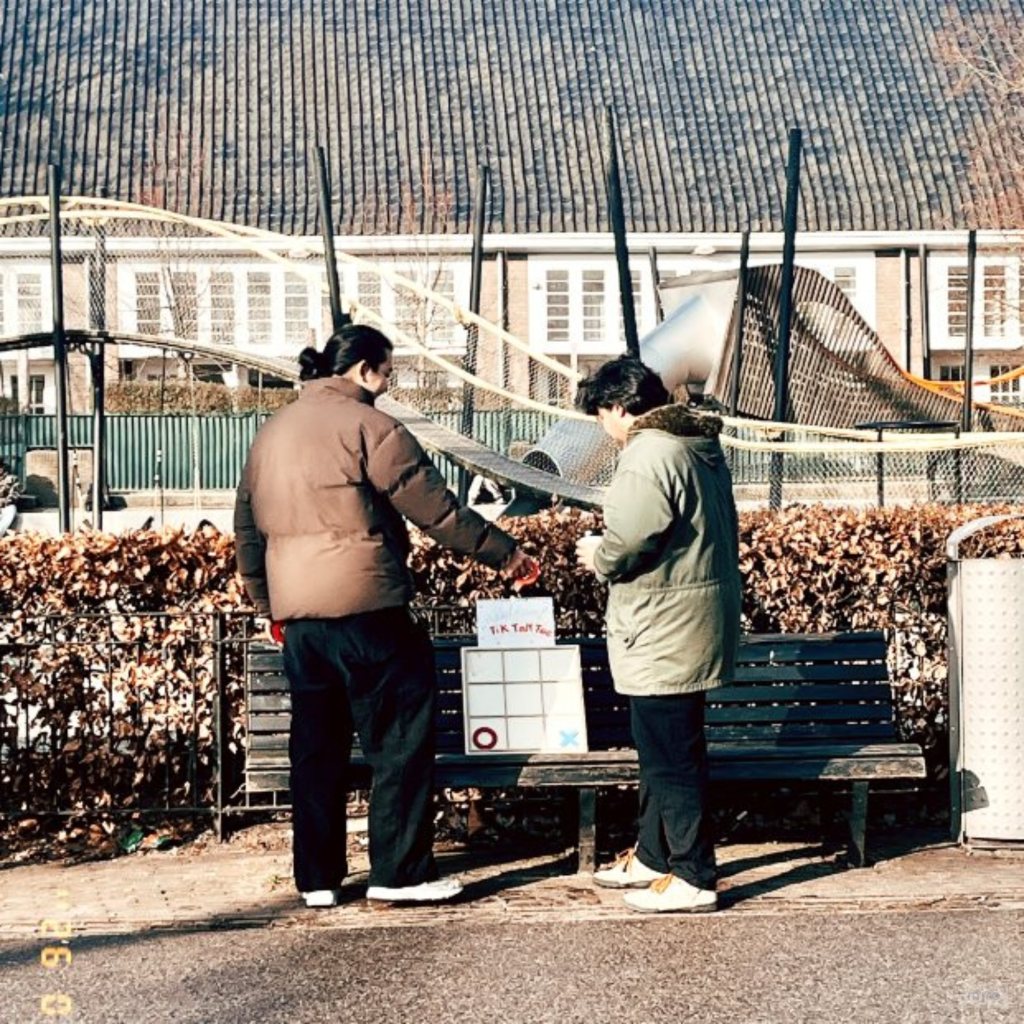
Day 4
Presenting
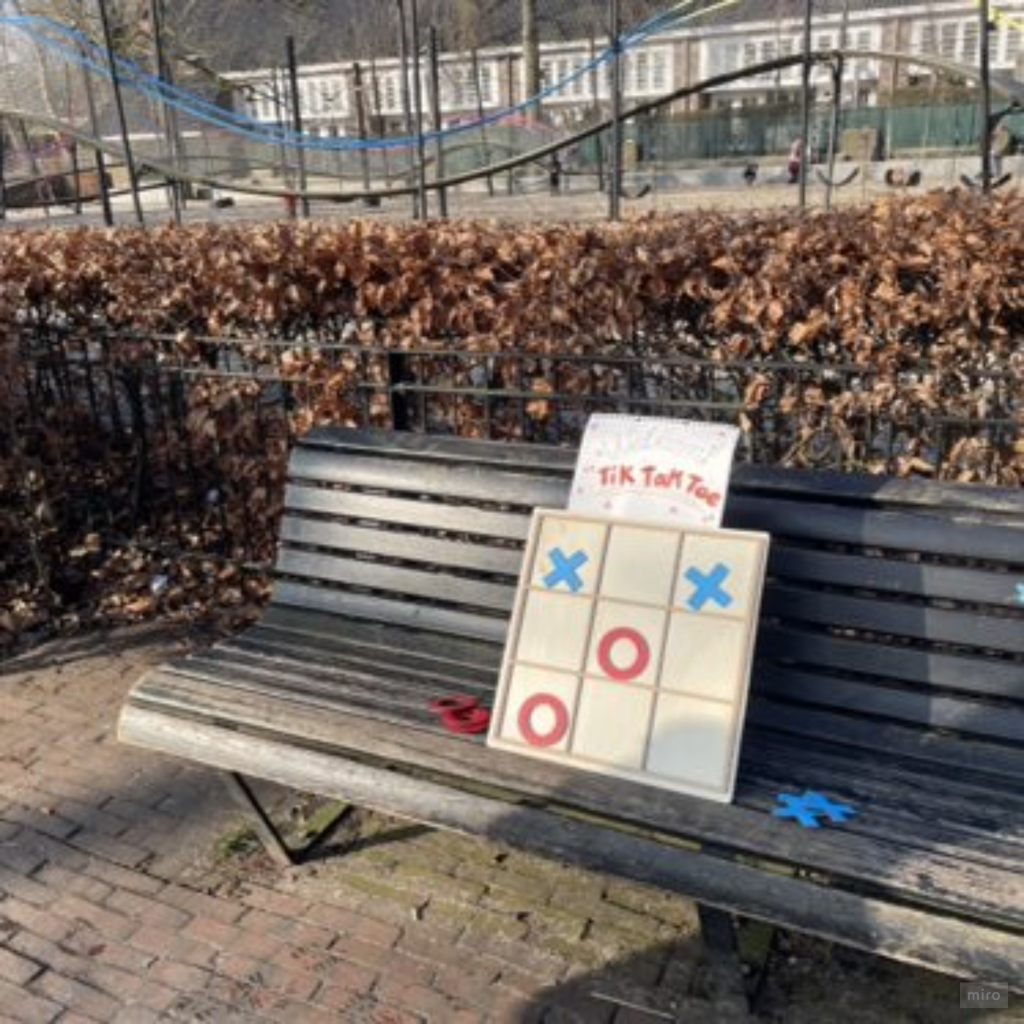
After refining our second iteration, we tested it in new locations. These environments resulted in more interaction, which gave us better insights into user behaviour.
We observed how long people engaged with the game. This helped us better understand how context influences interaction.
During our final presentation, we shared results of our testing locations, user interactions, and interview. We also reflected on what worked well and what could be improved. Finally, we presented a concept for a third iteration, which was developed with the help of ChatGPT.
Reflection
Throughout this project, I learned that design is not just about creating an object, but about understanding context, people, and interaction.
Our first prototype showed that visibility and attraction are essential in public spaces. An idea can be strong, but if it’s not noticeable or inviting, it will not achieve it’s goal.
Another important insight was the impact of location. Even a well-designed object may fail in the wrong environment. Testing in different spaces revealed how strongly context influences behaviour. People inn busy transit areas behave very differently from people in places where they spend time, such as parks.
I also learned the importance of iteration. Each version of our project improved through feedback, testing, and reflection. Presenting our work and receiving critique helped us evaluate our design more objectively and make better decisions.
Overall, this project helped me develop practical skills in digital fabrication and prototyping. It also strengthened my understanding of user interaction, experimentation, and the importance of testing designs in real-life situations.
Learning Outcome
1.2 The student maps the wants and needs of a diverse group of stakeholders using various research methods and translates this into requirements.
Through observation, interviews, and testing, I learned what encourages people to stop interact in public spaces. These insights influenced our design decisions throughout the week.


1.3 The student tests and iterates the design using various prototypes in an urban context.
This week revolved around creating, testing, and improving a public interaction object. By developing multiple versions of our tic-tac-toe game and testing them in different environments, I learned how important iteration and real-world testing are for successful design.
2.4 The student reflects on their own development, the transdisciplinary collaboration, and develops a vision of themselves as a designer.
Feedback from teachers and classmates helped me critically evaluate our design choices. I learned that context and user behaviour are just as important as the object itself.