Day 1
Happy Easter
Easter, no classes.
Day 2
Design
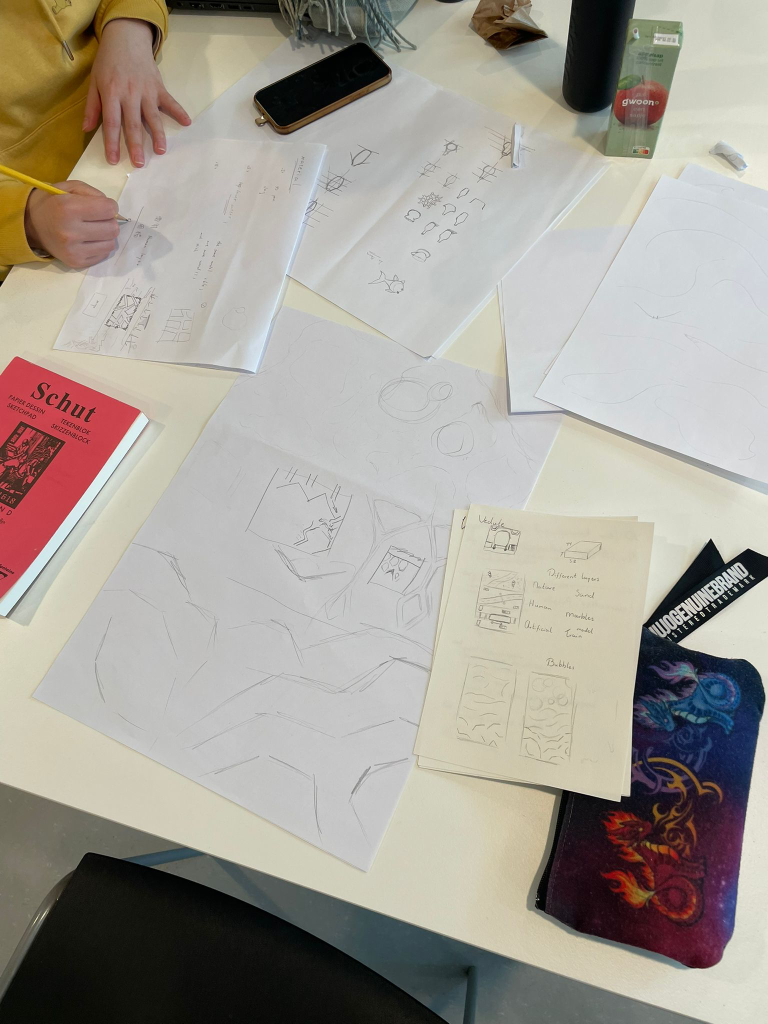
At school, we started the day with information about the midterm assessment. For this week and the next we had to finish:
- creating a presentation of max 10 minutes for the midterm
- updating the portfolio and handing it in on the DLO
- writing 2 A4 pages comparing Futurium and Evoluon
- continuing work on the Vedute
After that, Angela and I spent a lot of time discussing the specific design direction for our Vedute. We had several discussions and sketches about what kind of form would best represent our concept and how we could visualise the different layers.
To help us make a stronger decision, we discussed our ideas with Kevin. Based on the feedback, we decided to move away from a more literal design and instead chose a more abstract concept.
Day 3
Experimenting
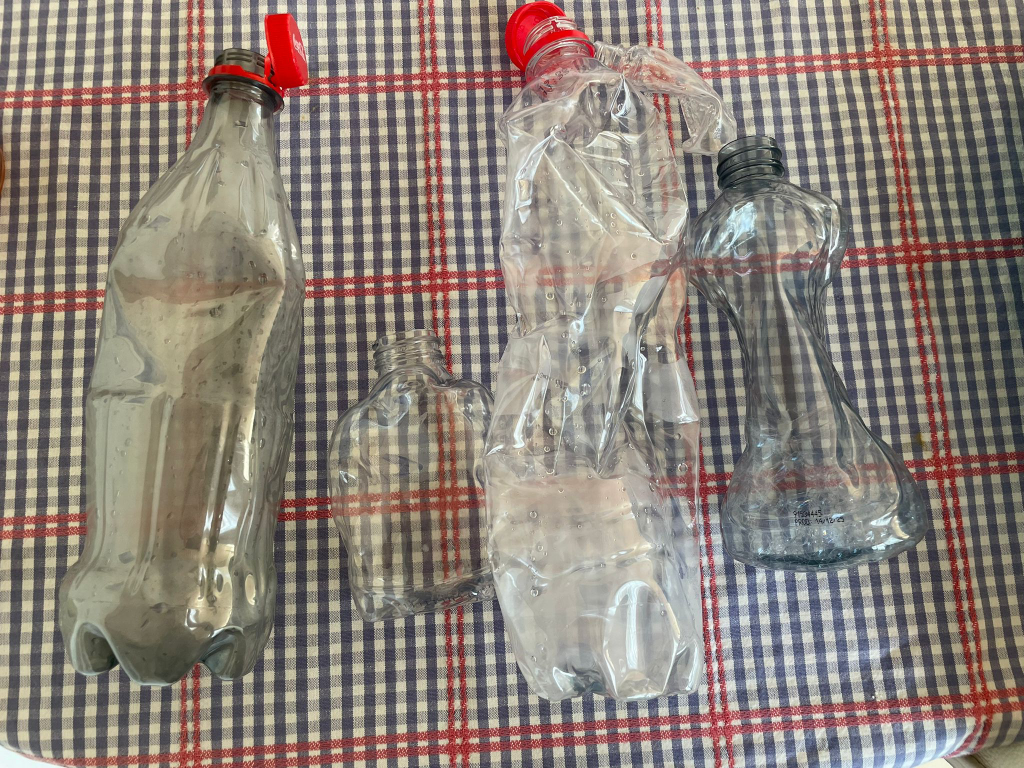
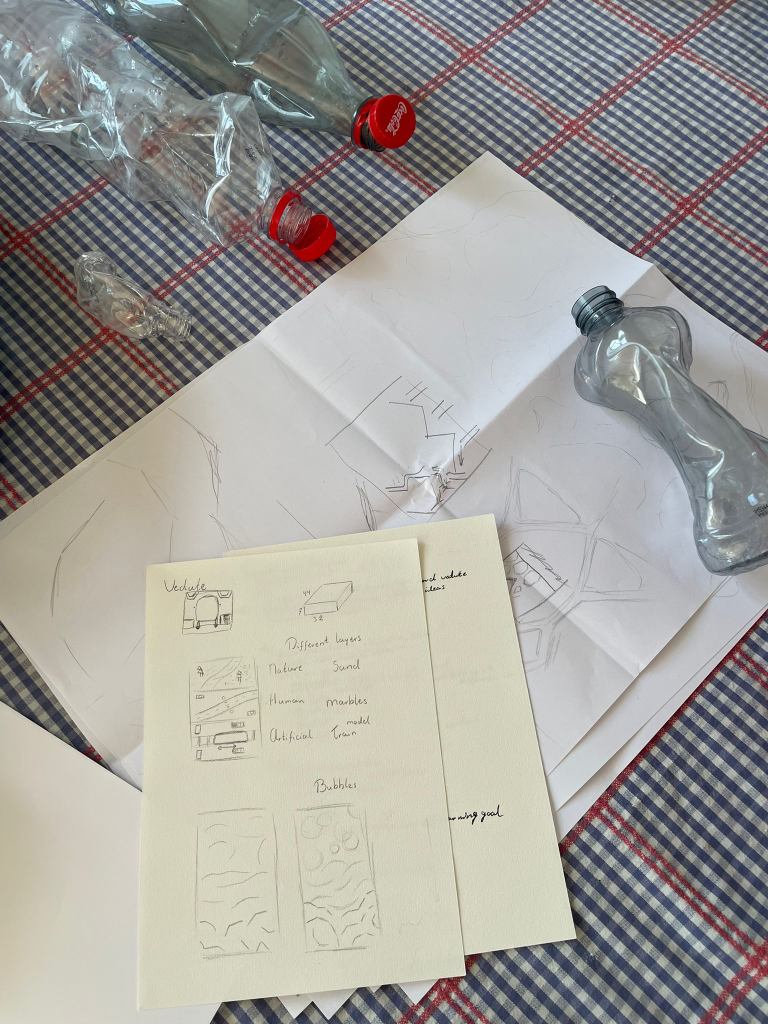
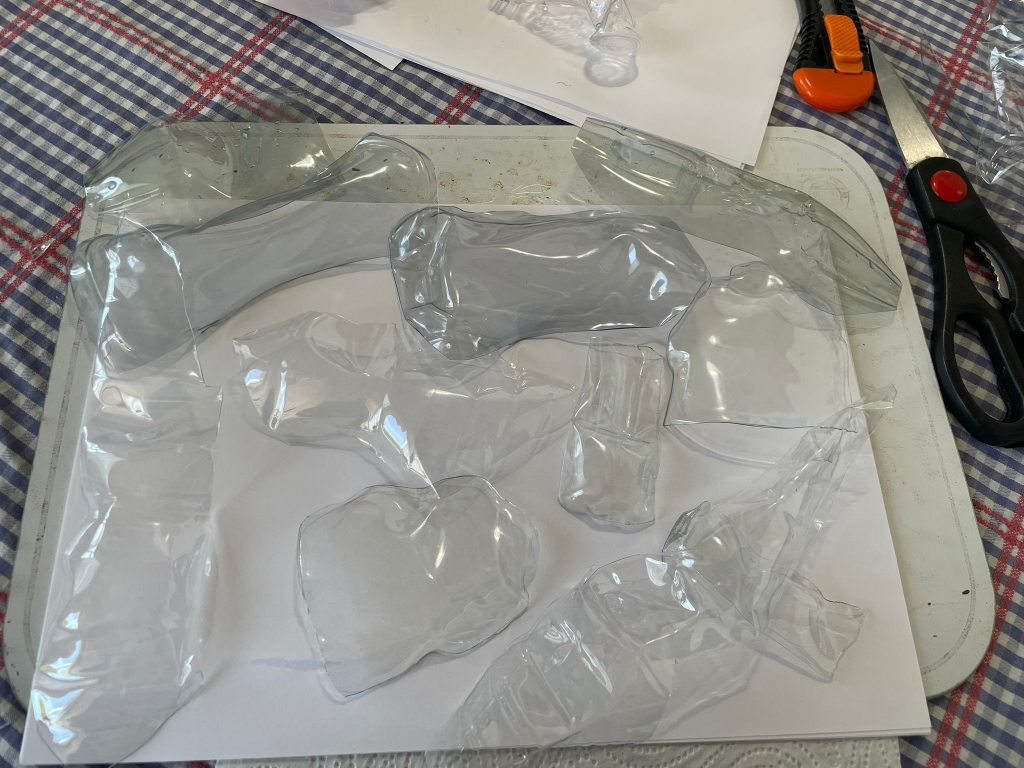
I stayed home today and focused on experimenting with materials and form. I used different bottles and hot water to create abstract and organic shapes that could be used for the Vedute. Through this process, I ended up with about 11 different shapes, each cut from different bottles.
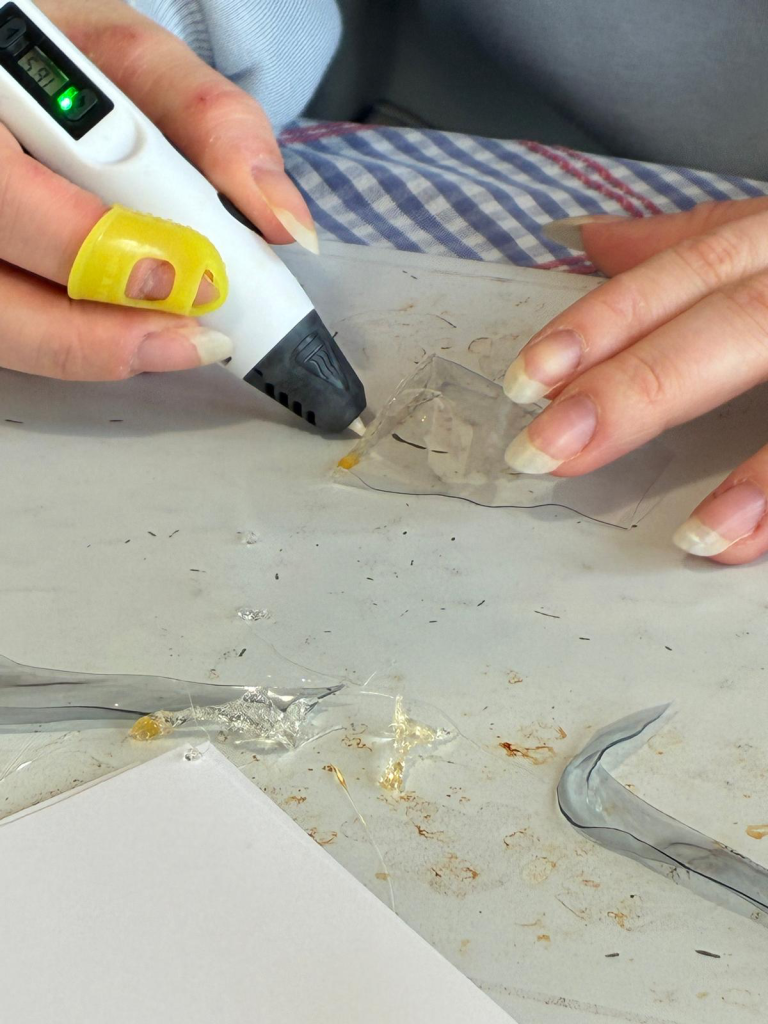
After that, I started testing how to assemble the pieces using a 3D pen to attach them to a plastic base layer. This experiment helped me determine whether this would be a suitable construction method.
However, because the shapes would not fit to the base fully, we realiser we would need either:
- stronger connections between the shapes
- an additional barrier to prevent sand from entering the construction
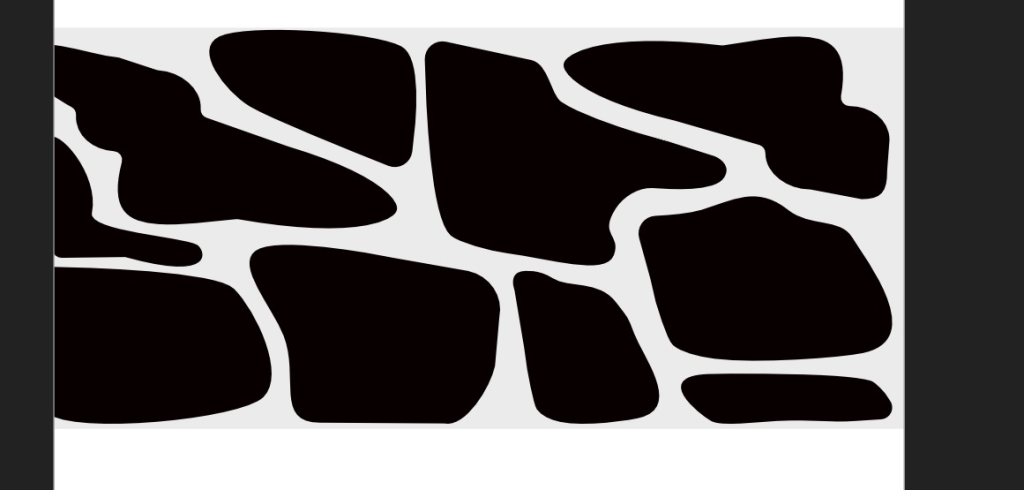
I also discussed progress with Angela. She sent me a screenshot of the design that we would laser cut the following day for the human layer.
Later that day, I also worked on my personal learning goal project. I started building the first version of the Space Invaders project, focusing on the basic gameplay. By the end of the day, I had a good-looking webpage, although the gameplay mechanics were not yet fully implemented.
Day 4
Assembly
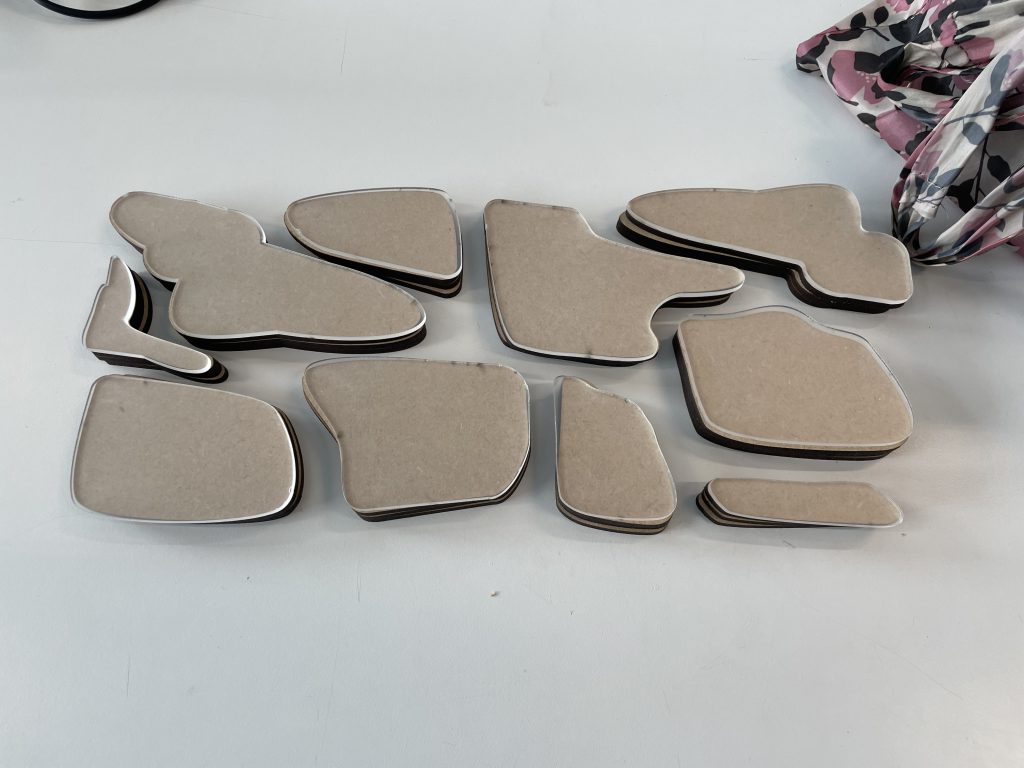
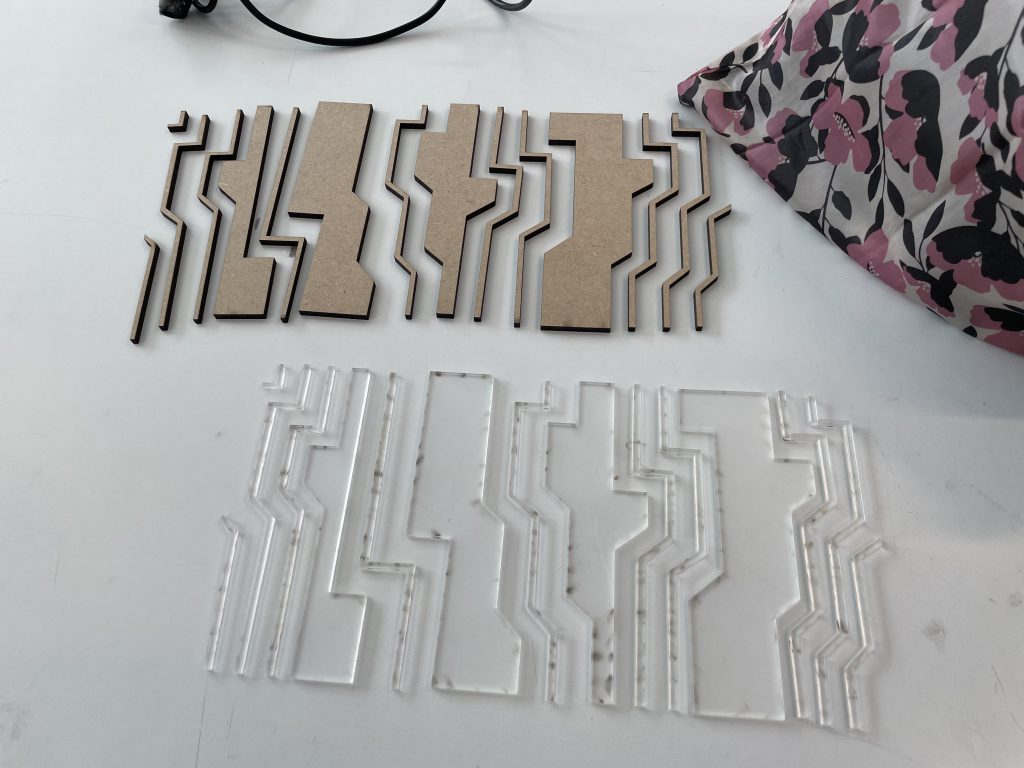
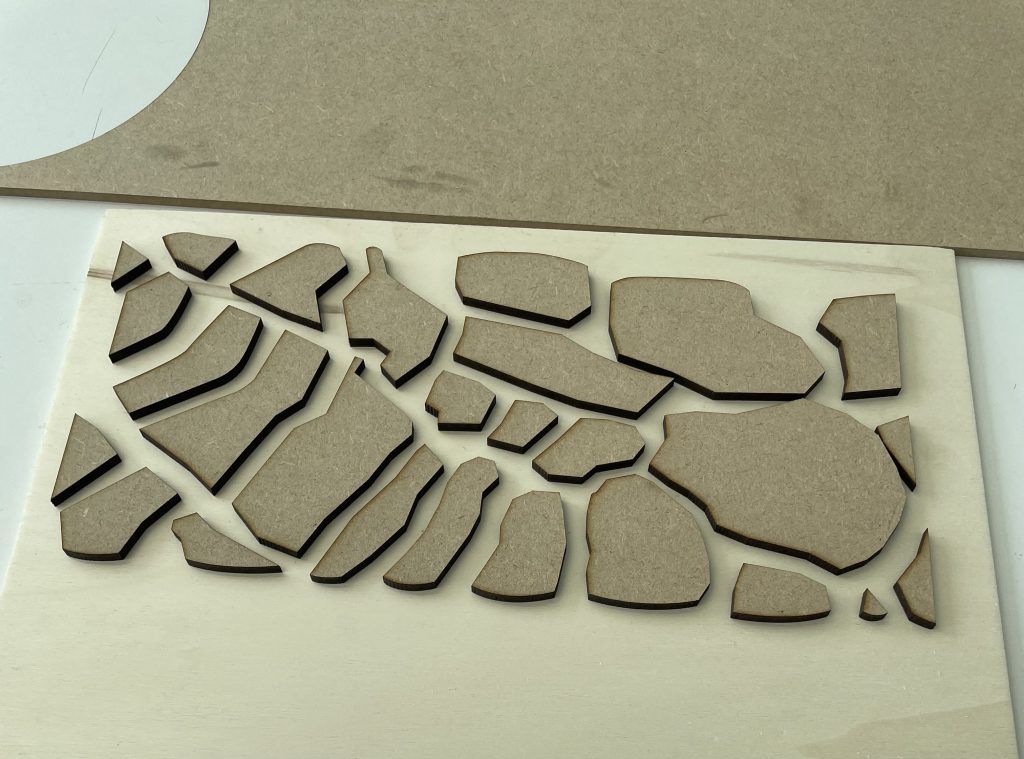
Today we went to the Makerslab to start lasercutting all the pieces needed for the Vedute. We began with the human layer, which had already been designed by Angela.
After that, I started working on the digital layer. Angela had already made an initial version, but it was not producing the result we wanted, so I redesigned it.
Once the digital layer was finalised, we started cutting it. Meanwhile, I continued designing a new human layer.
Interestingly, the original human layer design looked visually stronger as a natural layer, so we decided to repurpose it.
Designing the final human layer took quite some time because I tried to make it resemble Amsterdam from an aerial perspective. In the end, it did not fully resemble Amsterdam as I intended, but due to time pressure and the Makerslab closing soon, we decided to continue with the current design.
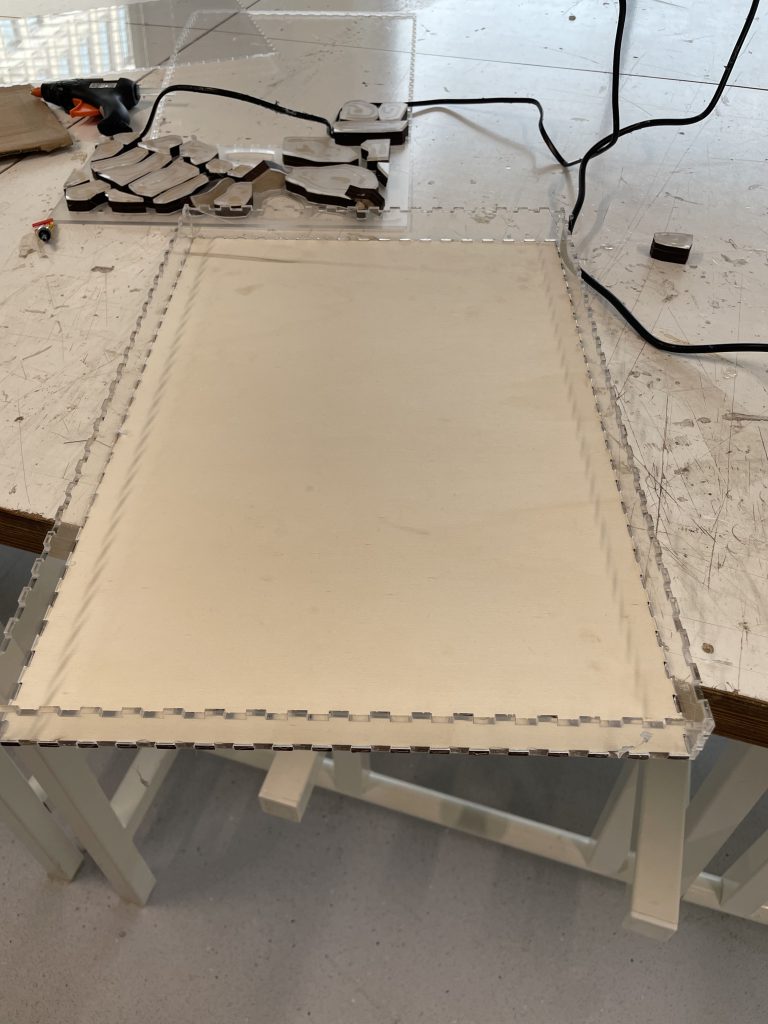
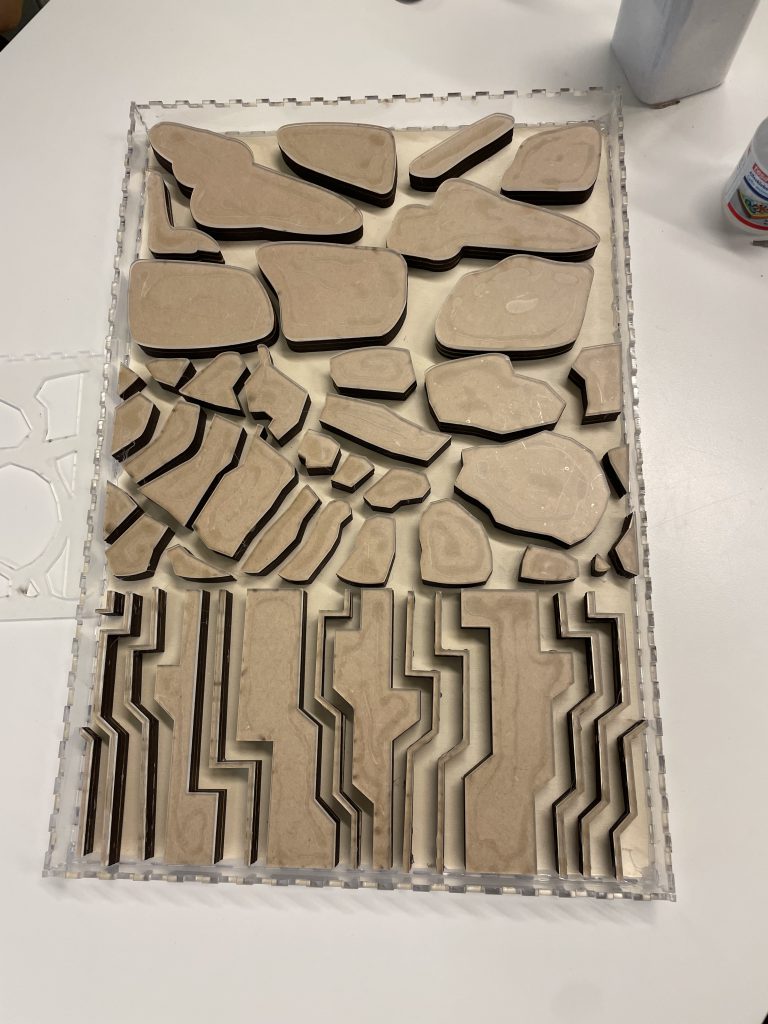
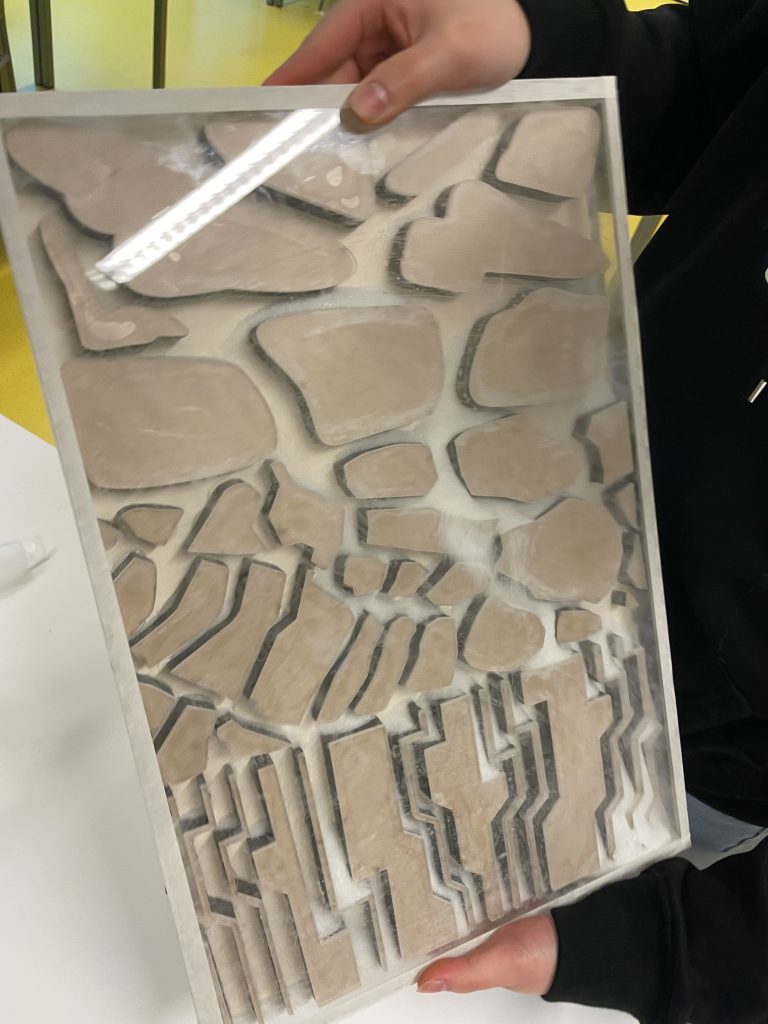
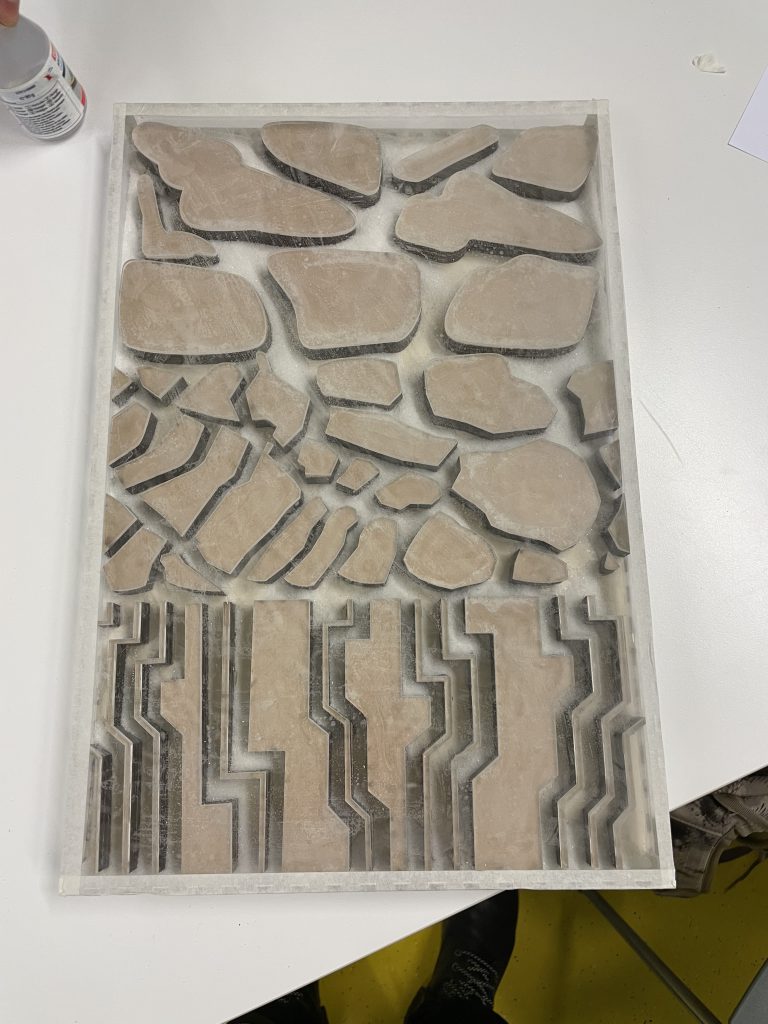
We still had to laser cut the box structure for the Vedute as well.
After all the cutting was finished, we realised we were unable to use hot glue in the Makerslab. We therefore returned to the classroom and assembled everything using regular glue. Although this worked, it took a very long time to dry, which slowed the final assembly process.
Reflection
This week taught me a lot about experimentation, iteration, and working under time pressure.
One of the most valuable parts of this process was the material experimentation on Day 3. Testing different bottles, heat deformation, and connection methods helped me better understand how abstract forms can be physically created and assembled.
I also learned how important it is to remain flexible in the design process. For example, the original human layer eventually worked better as a nature layer. Instead of forcing the original idea, we adapted the concept to better fit the visual result.
Another important learning point was dealing with time constraints. During the assembly day, we had limited time in the Makerslab and had to make quick design decisions. This taught me that sometimes a design does not need to be perfect, but needs to be good enough within the available timeframe.
Working on my personal learning goal alongside this project also helped me better connect my own interest in digital interaction and game development to the minor.
Overall, this week strengthened my skills in prototyping, making design decisions under pressure, and translating abstract concepts into physical form.
Learning Outcome
1.3 The student tests and iterates the design using various prototypes in an urban context.
Experimenting with materials, assembly methods, and different layer designs taught me the value of prototyping and adapting ideas throughout the design process.


2.2 The student shares relevant knowledge and skills from their own discipline to help others develop new ways of working and thinking.
I contributed to the development of the digital layer and used my experience with digital design tools to help improve the overall concept and execution of the Vedute.
2.3 The student formulates personal learning goals, plans activities around those learning goals, and monitors their own development.
Alongside the Vedute, I started working more on my Space Invaders learning goal. This allowed me to continue developing my programming skills while managing my time alongside the group project.
2.4 The student reflects on their own development, the transdisciplinary collaboration, and develops a vision of themselves as a designer.
The project taught me how to adapt ideas when plans change and how to work effectively under time pressure while collaborating with others.
2.5 The student demonstrates critical ability regarding their own contribution to the group work.
Throughout the project, I regularly evaluated my own contribution to the design and production process. This helped me identify where I added value and where I could improve in future collaborative projects.